
The Truth About Inflammation: What It Is, What Causes It, and How to Cool It Naturally
Chronic low-grade inflammation is at the root of nearly every modern disease — from heart disease to depression to autoimmune conditions. Here's what's actually happening in your body and the most effective natural ways to address it.
Inflammation has become something of a wellness buzzword, and like most buzzwords, it's both overused and underunderstood. I want to give you a clear, honest picture of what inflammation actually is, why chronic inflammation is so dangerous, and — most importantly — what you can do about it in your daily life.
Inflammation Is Not the Enemy
Let's start with something important: acute inflammation is not bad. It's actually one of your body's most brilliant and essential defense mechanisms. When you cut your finger, sprain your ankle, or catch a cold, your immune system mounts an inflammatory response — sending white blood cells, increased blood flow, and healing compounds to the site of injury or infection. The redness, warmth, swelling, and pain you experience are signs that your body is doing exactly what it's designed to do.
Acute inflammation is short-lived, purposeful, and self-resolving. It's the reason wounds heal and infections clear. Without it, we would not survive.
The problem is chronic, low-grade inflammation — a state in which the immune system remains in a state of low-level activation indefinitely, even when there is no acute injury or infection to address. This is sometimes called "silent inflammation" because it often produces no obvious symptoms in its early stages. But over months and years, it quietly damages tissues, disrupts hormonal signaling, accelerates aging, and lays the groundwork for virtually every major chronic disease.
What Drives Chronic Inflammation
The drivers of chronic inflammation are, in large part, the defining features of modern Western life. Ultra-processed foods — particularly those high in refined sugars, industrial seed oils (soybean, corn, canola), and artificial additives — are among the most potent inflammatory triggers in the modern diet. These foods promote the production of pro-inflammatory cytokines and disrupt the gut microbiome, which plays a central role in regulating immune function.
Chronic psychological stress is another major driver. When cortisol is chronically elevated, it initially suppresses inflammation — but over time, the immune system becomes resistant to cortisol's anti-inflammatory signals, and inflammation actually increases. This is why chronic stress is associated with higher rates of heart disease, depression, autoimmune conditions, and cancer.
Poor sleep is profoundly inflammatory. Even one night of inadequate sleep measurably increases inflammatory markers in the blood. Environmental toxins — from pesticides and plasticizers to air pollution and household chemicals — add to the inflammatory burden. A sedentary lifestyle, excess body fat (particularly visceral fat around the organs), smoking, and excessive alcohol consumption all contribute significantly.
For women, hormonal changes during perimenopause and menopause can also increase inflammatory activity, which is one reason why many women notice a worsening of joint pain, brain fog, and fatigue during this transition.
Signs of Chronic Inflammation
Because chronic inflammation is systemic and low-grade, its symptoms are often vague and easily attributed to other causes. Common signs include persistent fatigue that doesn't improve with rest, joint pain and stiffness (especially in the morning), brain fog and difficulty concentrating, frequent infections or slow recovery from illness, digestive issues including bloating, gas, and irregular bowel habits, skin conditions like eczema, psoriasis, or adult acne, mood disturbances including anxiety and depression, and unexplained weight gain — particularly around the abdomen.
If several of these resonate with you, it's worth discussing inflammatory markers with your healthcare provider. A simple blood test measuring C-reactive protein (CRP) and homocysteine can give you a useful baseline picture of your inflammatory status.
The Anti-Inflammatory Kitchen
Food is one of the most powerful levers we have for modulating inflammation. The Mediterranean diet — rich in vegetables, fruits, whole grains, legumes, olive oil, and fatty fish — has the strongest evidence base for reducing chronic inflammation of any dietary pattern studied.
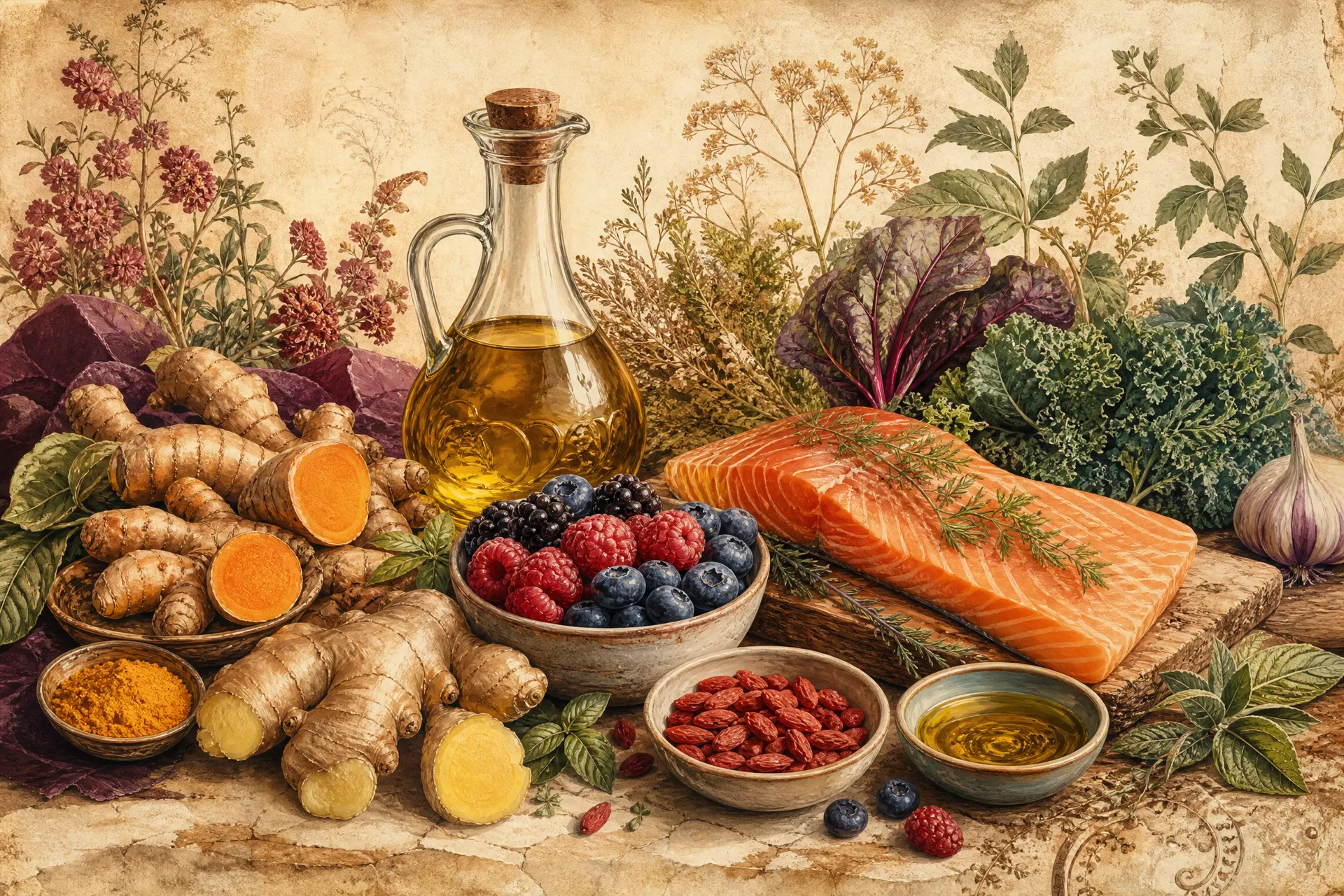
The most potent anti-inflammatory foods include fatty fish (salmon, sardines, mackerel) rich in omega-3 fatty acids, which directly reduce the production of pro-inflammatory compounds. Colorful vegetables and fruits provide polyphenols and antioxidants that neutralize free radicals and calm immune overactivation. Extra virgin olive oil contains oleocanthal, a compound with anti-inflammatory properties comparable to ibuprofen at high doses. Turmeric — particularly its active compound curcumin — is one of the most extensively studied natural anti-inflammatory agents. Ginger, green tea, berries, and dark leafy greens round out the anti-inflammatory pantry.
Equally important is reducing the pro-inflammatory foods: refined sugar and high-fructose corn syrup, refined carbohydrates, industrial seed oils, processed meats, and alcohol in excess.
Lifestyle as Medicine
Beyond food, several lifestyle practices have powerful anti-inflammatory effects. Regular moderate exercise — particularly walking, swimming, cycling, and yoga — reduces inflammatory markers significantly. The key word is moderate: extreme exercise without adequate recovery can actually increase inflammation.
Sleep is non-negotiable. Prioritizing 7–9 hours of quality sleep per night is one of the most impactful anti-inflammatory interventions available. Stress management through meditation, prayer, time in nature, and meaningful social connection all measurably reduce inflammatory activity. Even something as simple as spending 20 minutes in a forest (a practice the Japanese call shinrin-yoku or forest bathing) has been shown to reduce cortisol and inflammatory cytokines.
Managing your toxic load — choosing organic produce when possible, filtering your drinking water, switching to natural household cleaning products and personal care products — reduces the environmental inflammatory burden on your body over time.
Herbal Support
Several herbs have well-documented anti-inflammatory properties. Turmeric (curcumin) is the most researched, but its bioavailability is significantly enhanced when consumed with black pepper (piperine) and a healthy fat. Boswellia (frankincense resin) is particularly effective for joint inflammation. Ginger, rosemary, and green tea all provide meaningful anti-inflammatory support through regular dietary use.
The Ginger Turmeric Anti-Inflammatory Tea in our Wellness Library is a delicious daily way to incorporate several of these herbs at once.
A Word of Encouragement
If you're dealing with chronic inflammation, please know that this is not a life sentence. The body has a remarkable capacity to heal when we remove the things that are driving the fire and add the things that support resolution. Many women I've worked with have seen dramatic improvements in energy, pain, skin, mood, and cognitive clarity within 4–8 weeks of implementing consistent anti-inflammatory practices.
You don't have to do everything at once. Choose one area — food, sleep, stress, or movement — and commit to meaningful improvement there for 30 days. Then add another. Small, consistent changes compound into profound transformation.
With love and healing, Donna
#TreeOfLifeWellnessCoach #DonnaMurray #AntiInflammatory #ChronicInflammation #HolisticHealth #NaturalWellness #WomensHealth #WellnessCoach #GraceHopeHealing
Ready to walk this out with support?
Book a free discovery call and let's talk about what your body has been trying to tell you.
Book a discovery call