Finding Peace in the Chaos: A Holistic Approach to Anxiety for Women
Anxiety is one of the most common health challenges facing women today. But it's not just a mental health issue — it's a whole-body experience with physical, nutritional, hormonal, and spiritual dimensions. Here's a comprehensive approach to finding genuine peace.

Anxiety is the most common mental health condition in the United States, and women are diagnosed with it at roughly twice the rate of men. If you've ever experienced the racing heart, the tight chest, the spiral of "what ifs," the sense that something terrible is about to happen even when everything is fine — you know how profoundly anxiety can affect the quality of your life.
I want to talk about anxiety today not as a character flaw, not as a spiritual failure, and not as a problem to be suppressed or medicated away (though medication has its place for many people). I want to talk about it as what it actually is: a whole-body experience with physical, neurological, hormonal, nutritional, and spiritual dimensions — all of which can be addressed.
What Anxiety Actually Is
At its core, anxiety is the activation of your threat-detection system in the absence of an actual, immediate threat. Your amygdala — the brain's alarm center — fires as if danger is present, triggering the same cascade of cortisol, adrenaline, and physiological changes that would prepare you to flee from a predator. Your heart rate increases, your breathing becomes shallow, your muscles tense, your digestion slows, and your thinking narrows to focus on the perceived threat.
This system is brilliantly designed for genuine emergencies. The problem is that the modern world presents our nervous systems with an unprecedented volume of perceived threats — from news and social media to financial stress, relationship conflict, health worries, and the relentless pressure to perform and achieve — without the physical discharge (running, fighting) that would normally complete the stress cycle and return the system to baseline.
For many women, anxiety is also significantly influenced by hormonal fluctuations. Estrogen has a direct effect on serotonin and GABA — the brain's primary calming neurotransmitters. As estrogen fluctuates during the menstrual cycle, perimenopause, and menopause, anxiety can worsen significantly. This is why many women notice that their anxiety is worst in the premenstrual week (when estrogen drops sharply) or during perimenopause.
The Physical Roots of Anxiety
Several physical factors can significantly worsen anxiety and are often overlooked in conventional treatment:
Blood sugar instability is one of the most common and underrecognized drivers of anxiety. When blood sugar drops (hypoglycemia), the body releases adrenaline and cortisol to raise it — triggering the same physiological state as anxiety. Women who skip meals, eat high-sugar diets, or consume a lot of caffeine often experience anxiety symptoms that are substantially driven by blood sugar dysregulation.
Caffeine directly stimulates the adrenal glands and raises cortisol and adrenaline. For anxiety-prone individuals, even moderate caffeine consumption can significantly worsen symptoms. If you're dealing with anxiety, experimenting with reducing or eliminating caffeine for 4–6 weeks is one of the most impactful interventions you can try.
Magnesium deficiency — as discussed in a previous post — impairs GABA activity and is strongly associated with anxiety. Many anxious women are significantly deficient in this mineral.
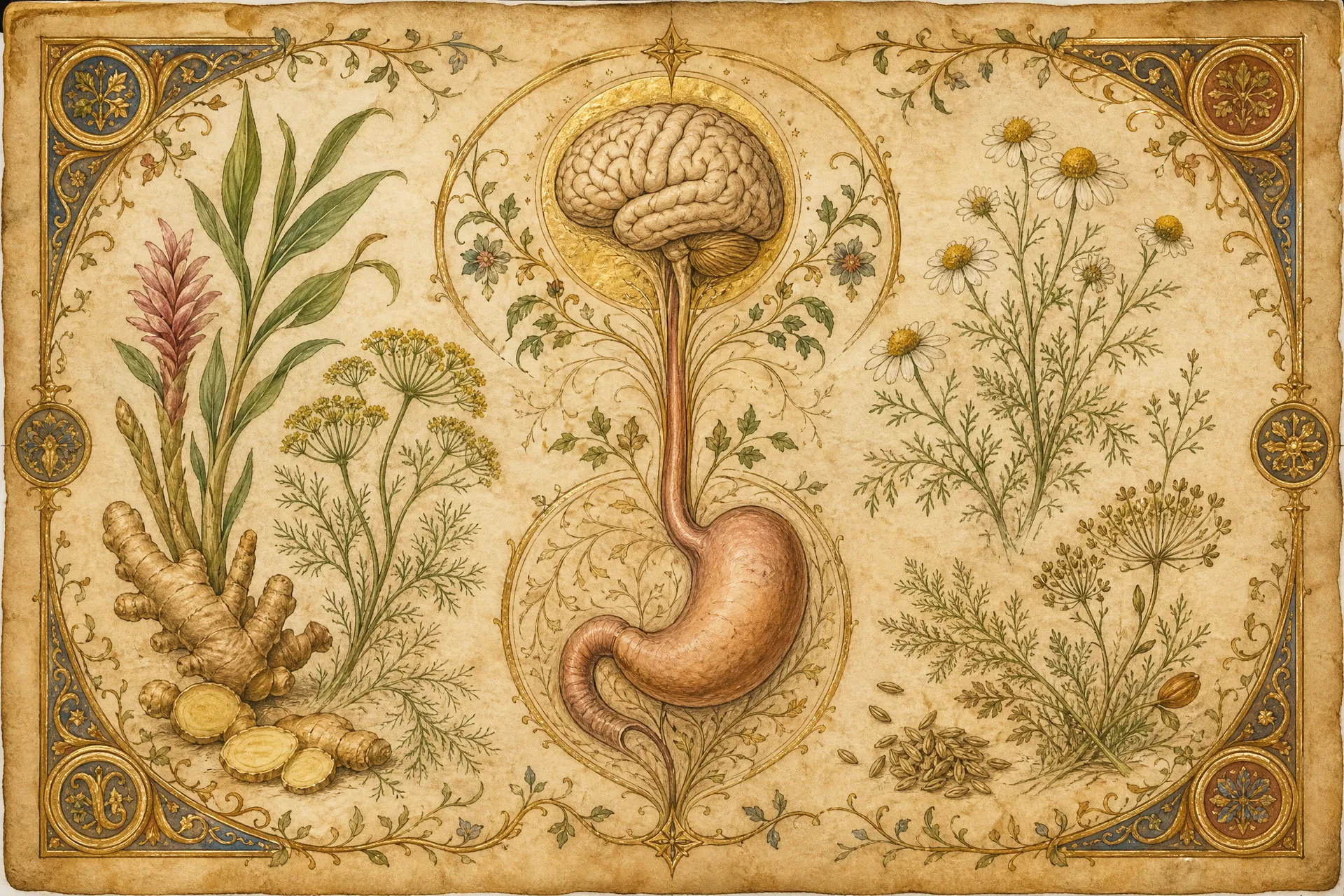
Gut health plays a surprisingly direct role in anxiety through the gut-brain axis. Approximately 95% of the body's serotonin is produced in the gut, and the vagus nerve carries signals bidirectionally between the gut and the brain. A disrupted gut microbiome can directly contribute to anxiety and depression through multiple pathways.
Thyroid dysfunction — both hypothyroidism and hyperthyroidism — can cause or worsen anxiety symptoms. If you have persistent anxiety that doesn't respond to other interventions, thyroid function is worth checking.
Nervous System Regulation: The Foundation
The most direct way to address anxiety is to work with the nervous system — specifically, to activate the parasympathetic nervous system (the "rest and digest" branch) and reduce the dominance of the sympathetic nervous system (the "fight or flight" branch).
Slow, diaphragmatic breathing is the single most accessible and effective tool for this. When you breathe slowly and deeply into your belly, you stimulate the vagus nerve, which directly activates the parasympathetic nervous system. The 4-7-8 breathing technique (inhale for 4, hold for 7, exhale for 8) is particularly effective. Even 5 minutes of slow breathing can measurably shift your physiological state.
Regular meditation practice — even 10–15 minutes daily — has been shown in numerous studies to reduce anxiety, lower cortisol, and physically change the structure of the brain over time, reducing amygdala reactivity and strengthening the prefrontal cortex's ability to regulate emotional responses.
Physical movement, particularly yoga, walking, and swimming, provides the physical discharge that completes the stress cycle and returns the nervous system to baseline. Exercise also directly reduces cortisol and increases GABA and serotonin.
Cold exposure — ending your shower with 30–60 seconds of cold water — activates the vagus nerve and has been shown to reduce anxiety symptoms over time. It's uncomfortable, but the effect is real.
Herbal and Nutritional Support
Several herbs have well-documented anxiolytic (anxiety-reducing) properties. Ashwagandha has been shown in multiple clinical trials to significantly reduce cortisol and anxiety scores. Passionflower has GABA-modulating effects comparable to some pharmaceutical anxiolytics in studies, without the side effects. Lemon balm reduces anxiety and promotes calm without sedation. Holy basil (tulsi) is an adaptogen that modulates the stress response and supports GABA activity. Valerian root is primarily known for sleep support but also has anxiolytic properties.
From a nutritional standpoint, omega-3 fatty acids (from fatty fish, flaxseeds, and walnuts) have strong evidence for reducing anxiety. Magnesium glycinate, as discussed, supports GABA activity. B vitamins — particularly B6, B9 (folate), and B12 — are essential for neurotransmitter synthesis.
The Spiritual Dimension
I would be doing you a disservice if I didn't address the spiritual dimension of anxiety, because for many women, this is where the deepest healing happens.
Anxiety is, at its root, a response to uncertainty — to the gap between what we can control and what we cannot. And the spiritual antidote to that gap is not more control, but deeper trust. The practice of surrendering what we cannot control to a God who is trustworthy, present, and good is not a passive resignation — it is an active, courageous choice that the brain and nervous system respond to in measurable ways.
Philippians 4:6–7 offers one of the most practically applicable pieces of wisdom in all of Scripture: "Do not be anxious about anything, but in every situation, by prayer and petition, with thanksgiving, present your requests to God. And the peace of God, which transcends all understanding, will guard your hearts and your minds in Christ Jesus."
Notice the instruction: prayer with thanksgiving. Gratitude, as we've explored, is itself a physiological intervention. The combination of bringing our worries to God and choosing gratitude in the same moment is a powerful double activation of the nervous system's calming pathways.
A Compassionate Closing
If you're living with anxiety, please know that you are not weak, you are not broken, and you are not alone. Anxiety is one of the most common human experiences, and it is profoundly treatable — not always curable, but genuinely manageable — through a thoughtful, whole-person approach.
Start with one thing. Maybe it's cutting back on caffeine. Maybe it's a daily breathing practice. Maybe it's adding magnesium before bed. Maybe it's a conversation with a therapist or your doctor. Whatever it is, take one step today.
Peace is possible. I've seen it happen for hundreds of women. And it can happen for you.
With love and hope, Donna
#TreeOfLifeWellnessCoach #DonnaMurray #AnxietyRelief #HolisticAnxiety #WomensWellness #NervousSystemHealth #MindBodySpirit #WellnessCoach #GraceHopeHealing
Ready to walk this out with support?
Book a free discovery call and let's talk about what your body has been trying to tell you.
Book a discovery call