Nettle Leaf: The Humble Weed That Has Nourished Women for Centuries
Stinging nettle may be the most underappreciated herb in the Western world. Packed with iron, calcium, magnesium, and vitamins, it has been used for thousands of years to support women's health, combat fatigue, and nourish the body at a cellular level.
Nettle Leaf: The Humble Weed That Has Nourished Women for Centuries
If you've ever walked through a garden or woodland path and brushed against a stinging nettle plant, you know its sting. That sharp, burning sensation from the tiny silica needles on its leaves is enough to make most people give it a wide berth. But for thousands of years, healers, herbalists, and wise women across cultures have known that beneath that prickly exterior lies one of the most nutritionally dense and therapeutically valuable plants on earth.
A History Written in Sting and Healing
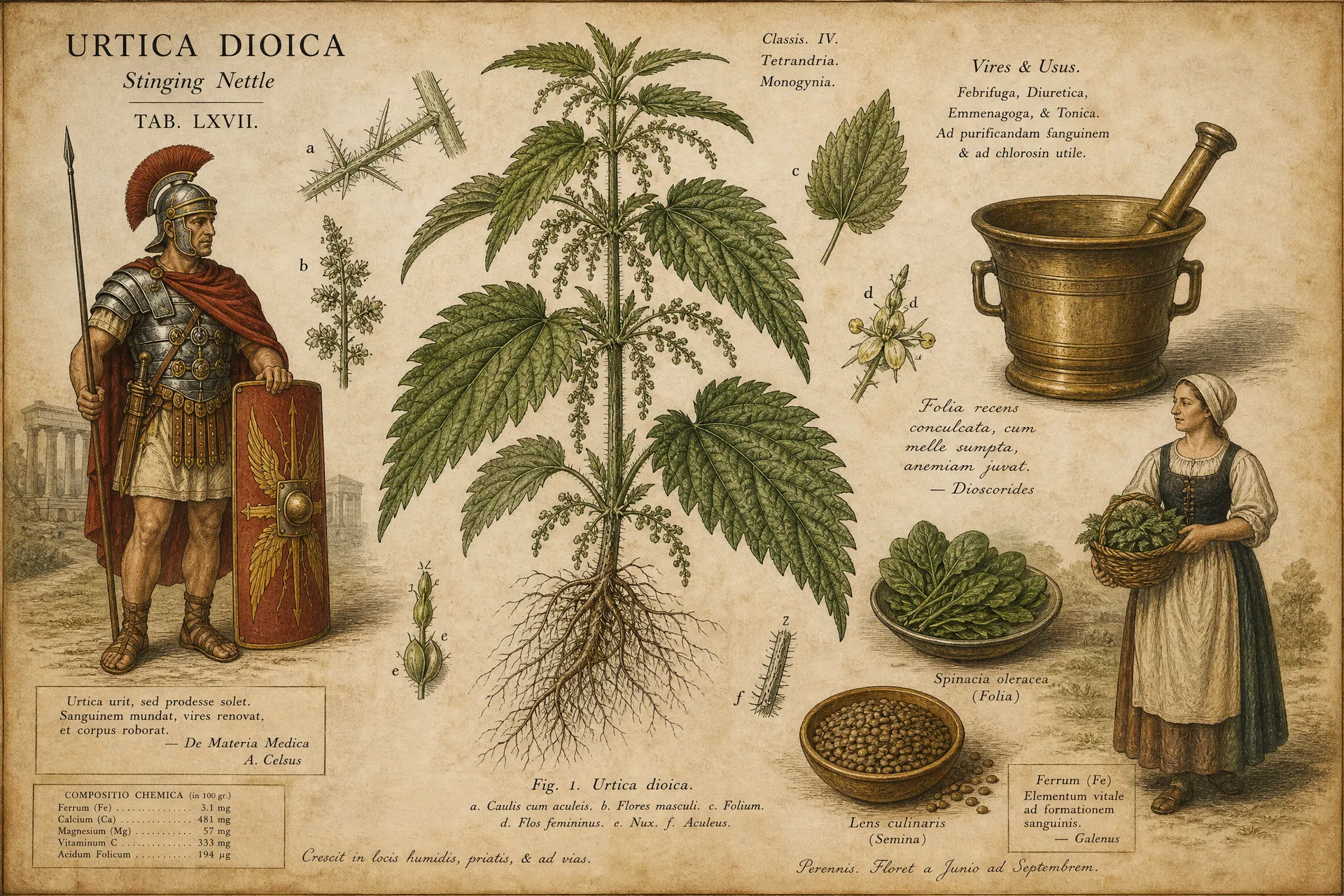
Stinging nettle (Urtica dioica) has been used medicinally for at least 2,000 years. The ancient Romans used it in a practice called "urtication" — deliberately stinging arthritic joints with fresh nettle to stimulate circulation and reduce pain. This sounds extreme, but the formic acid and histamine in the stings actually trigger an anti-inflammatory response.
In medieval Europe, nettle was a dietary staple, particularly in early spring when it was one of the first green plants to emerge after winter. It was eaten as a vegetable, brewed as a tea, and used extensively in folk medicine for everything from anemia to arthritis to urinary tract infections. The Greek physician Dioscorides wrote about its medicinal properties in his first-century text "De Materia Medica," noting its use as a diuretic and for treating lung conditions.
Native American tribes used various nettle species for food, fiber (nettle cloth was made long before cotton became widespread), and medicine. They recognized its particular value for pregnant and nursing women, using it to support iron levels and milk production.
The Nutritional Powerhouse
When nettle is dried or cooked, the sting is neutralized, and what remains is an extraordinarily nutrient-dense food and medicine. Per 100g of dried nettle leaf, you'll find:
- Iron: 3.1mg (particularly valuable for women with heavy periods or anemia)
- Calcium: 481mg (more than milk, gram for gram)
- Magnesium: 57mg (essential for over 300 enzymatic reactions)
- Vitamin C: 333mg (supports iron absorption and immune function)
- Vitamin K: Critical for bone health and blood clotting
- Folate: Essential for cell division and particularly important for women of reproductive age
Nettle for Women's Health
As a certified herbal counselor, nettle is one of the herbs I recommend most frequently for women, particularly those dealing with:
- Iron-Deficiency Anemia: Nettle tea is a gentle, food-based way to increase iron intake. The vitamin C naturally present in nettle enhances iron absorption — a perfect synergy.
- Heavy Menstrual Bleeding: Nettle's vitamin K content supports healthy blood clotting, and its astringent properties may help reduce excessive bleeding.
- Adrenal Fatigue: Nettle is deeply nourishing to the adrenal glands, providing the minerals they need to function optimally under stress.
- Bone Health: With its exceptional calcium and vitamin K content, nettle is a wonderful ally for women concerned about bone density, particularly during perimenopause.
- Kidney and Urinary Health: Nettle is a gentle diuretic that supports kidney function and can help prevent urinary tract infections.
- Seasonal Allergies: Freeze-dried nettle leaf has been shown in studies to reduce histamine response, making it a natural antihistamine.
How to Use Nettle
The simplest and most effective way to use nettle is as an infusion — a long-steeped herbal tea that extracts the minerals more effectively than a quick brew. Place 1–2 tablespoons of dried nettle leaf in a quart jar, pour boiling water over it, cover, and let steep for 4–8 hours (or overnight). Strain and drink throughout the day. This "nourishing herbal infusion" method, popularized by herbalist Susun Weed, extracts significantly more minerals than a standard 5-minute tea.
Nettle can also be eaten as a cooked green (treat it like spinach once blanched), taken as a tincture, or used in soups and stews. Fresh nettle pesto, made with blanched nettle leaves, is surprisingly delicious.
The next time you see a stinging nettle plant, I hope you'll look at it with new eyes — not as a weed to be avoided, but as a generous, ancient ally that has been nourishing and healing women for thousands of years. That humble sting is just its way of asking to be treated with respect.
#TreeOfLifeWellnessCoach #DonnaMurrayReady to walk this out with support?
Book a free discovery call and let's talk about what your body has been trying to tell you.
Book a discovery call