Fermented Foods and Your Gut: A Beginner's Guide to Probiotics Through Food
Fermented foods are among the most powerful tools for gut health — and they've been part of human diets for thousands of years. Here's what they are, why they matter, and how to start incorporating them.
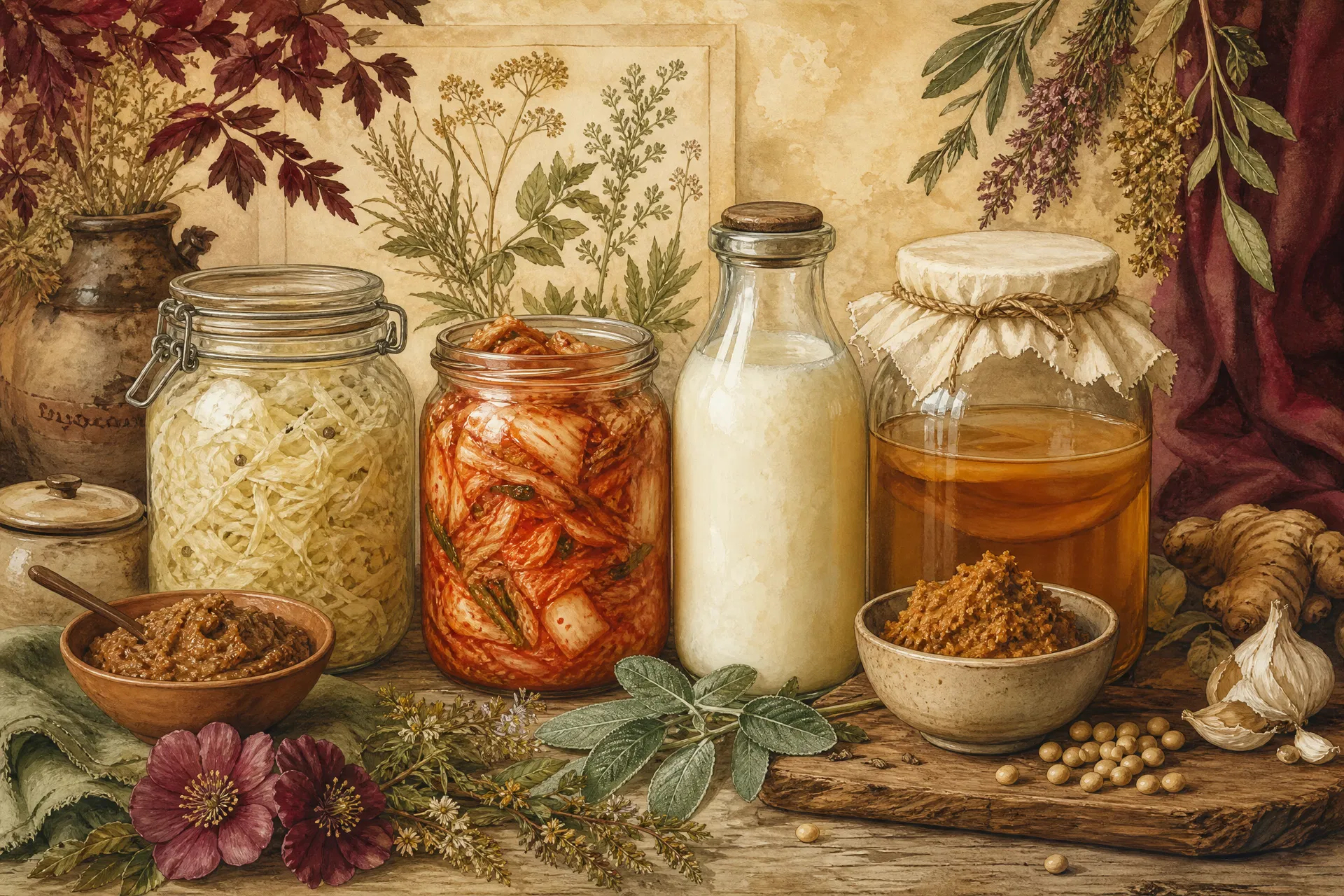
Long before the word "probiotic" existed, humans were fermenting foods. Every traditional culture on earth developed fermented foods as a way of preserving the harvest, improving digestibility, and — though they didn't have the language for it — supporting the health of the gut microbiome. Sauerkraut in Germany, kimchi in Korea, kefir in the Caucasus, miso in Japan, injera in Ethiopia, kvass in Russia, yogurt across the Middle East and Mediterranean — fermentation is one of the oldest and most universal food technologies in human history.
We are only now beginning to understand, through modern microbiome research, why these traditional foods were so valuable. And what we're learning is remarkable.
The Gut Microbiome: A Brief Introduction
Your gut is home to approximately 38 trillion microorganisms — bacteria, fungi, viruses, and other microbes — that collectively make up your gut microbiome. This community of organisms is not merely a passive passenger in your digestive system. It is an active participant in your health, influencing everything from nutrient absorption and immune function to mood, cognition, hormone metabolism, and inflammation.
A diverse, balanced microbiome — one with a wide variety of beneficial species and low levels of pathogenic ones — is associated with better health outcomes across virtually every domain studied. A disrupted microbiome (called dysbiosis) is associated with inflammatory bowel disease, obesity, type 2 diabetes, depression, anxiety, autoimmune conditions, allergies, and more.
The modern lifestyle is not kind to the microbiome. Antibiotic use (both direct and through food supply), highly processed diets low in fiber, chronic stress, inadequate sleep, environmental toxins, and reduced exposure to the natural microbial world (due to urbanization and excessive hygiene) have all contributed to a significant reduction in microbiome diversity compared to our ancestors and to traditional communities living closer to the land.
How Fermented Foods Support the Microbiome
Fermented foods support gut health through two primary mechanisms:
Live cultures (probiotics): Many fermented foods contain live beneficial bacteria that, when consumed, temporarily colonize the gut and provide direct benefits. They compete with pathogenic bacteria for resources, produce antimicrobial compounds, support the integrity of the gut lining, and modulate immune activity. A landmark 2021 study from Stanford found that a diet high in fermented foods significantly increased microbiome diversity and reduced markers of inflammation — more effectively than a high-fiber diet alone.
Postbiotics and bioactive compounds: The fermentation process itself transforms foods in ways that go beyond the live cultures. Fermentation increases the bioavailability of nutrients, produces beneficial compounds like short-chain fatty acids, vitamins (particularly B vitamins and vitamin K2), and bioactive peptides, and reduces anti-nutrients like phytic acid that can interfere with mineral absorption.
The Most Beneficial Fermented Foods
Yogurt is perhaps the most accessible fermented food in the Western diet. Choose plain, full-fat yogurt with live and active cultures — not the sweetened, flavored varieties that contain more sugar than beneficial bacteria. Greek yogurt provides the added benefit of higher protein content.
Kefir is a fermented milk drink that contains a significantly more diverse range of bacterial strains than yogurt — typically 30 or more species compared to yogurt's 2–7. It has a tart, slightly effervescent flavor and can be used in smoothies, dressings, or drunk straight. Coconut kefir is available for those who are dairy-free.
Sauerkraut is fermented cabbage — one of the simplest and most nutritious fermented foods. It's rich in vitamin C, vitamin K2, and beneficial bacteria. The key is to choose raw, unpasteurized sauerkraut (found in the refrigerated section, not shelf-stable cans) — pasteurization kills the live cultures. A tablespoon or two with meals is a simple, effective habit.
Kimchi is the Korean cousin of sauerkraut — fermented cabbage (usually napa cabbage) with radish, garlic, ginger, and chili. It's extraordinarily rich in beneficial bacteria and has been shown in studies to support immune function, reduce inflammation, and improve metabolic health. Start with small amounts if you're new to it, as the spice and fermentation can be intense.
Miso is a fermented soybean paste used extensively in Japanese cuisine. A cup of miso soup provides beneficial bacteria along with minerals and umami flavor. Choose unpasteurized miso and add it to soups after removing from heat to preserve the live cultures.
Kombucha is a fermented tea beverage that has become widely available. It contains beneficial bacteria and yeasts, along with organic acids and B vitamins. Choose varieties that are low in added sugar — some commercial kombuchas are quite sweet, which undermines the gut health benefits.
Tempeh is a fermented soybean product from Indonesia — firm, nutty, and protein-rich. Unlike tofu, tempeh is fermented, which improves the digestibility of the soybeans and increases nutrient bioavailability. It's an excellent plant-based protein source with probiotic benefits.
Getting Started: A Gentle Approach
If you're new to fermented foods, start slowly. Introducing large amounts of fermented foods too quickly can cause temporary digestive discomfort — bloating, gas, or changes in bowel habits — as your microbiome adjusts. Begin with a tablespoon of sauerkraut or a small serving of yogurt daily, and gradually increase over 2–4 weeks.
Aim to include at least one fermented food in your diet every day. Variety matters — different fermented foods contain different bacterial strains, so rotating through several types provides broader microbiome support than relying on just one.
Pair fermented foods with prebiotic foods — the fiber-rich foods that feed your beneficial bacteria. Garlic, onions, leeks, asparagus, Jerusalem artichokes, bananas, oats, and flaxseeds are all excellent prebiotic sources. Think of probiotics as planting seeds in your garden, and prebiotics as watering and fertilizing them.
A Word on Supplements
Probiotic supplements can be useful in specific situations — after antibiotic use, during travel, or when dealing with specific digestive conditions. But for most people, food-based probiotics are preferable: they come packaged with the nutrients, fibers, and bioactive compounds that support microbial survival and activity in ways that isolated supplement strains cannot replicate.
Food first, always. Your ancestors knew this intuitively. Now science is confirming why.
With love, Donna
#TreeOfLifeWellnessCoach #DonnaMurray #FermentedFoods #GutHealth #Probiotics #Microbiome #HolisticNutrition #WomensWellness #WellnessCoach #GraceHopeHealing
Ready to walk this out with support?
Book a free discovery call and let's talk about what your body has been trying to tell you.
Book a discovery call